Brother Placid, the headmaster
The Greatest Beer Run Ever: A Memoir of Friendship, Loyalty, and WarBrother Placid, the headmaster, combines a vivid, sociable presence with a serious commitment to his pupils’ prospects. His recognition of John McGahern’s ability leads him beyond encouragement in the classroom: after seeing the boy’s absences for farm work, he visits the family potato field and helps persuade Francis (Frank) McGahern to send his son back to school.
Identity and Character
Brother Placid, the headmaster, replaces Brother Damien as principal. A handsome Kerryman and a good footballer who plays for the town team, he is also fond of drink; even after a heavy late-night session at Joe Lowe’s, he appears sparkling the following morning. The memoir presents these details alongside his professional gifts, not as a contradiction that diminishes them: he is an exceptional teacher, alert to his pupils and capable of bringing humour, encouragement, or disapproval to bear.
His thick spectacles and the white handkerchief with which he polishes them throughout the day give his attentiveness a recurring physical expression. Behind the glasses, his eyes can glint with different responses. In his dealings with McGahern, that watchfulness becomes practical insight: he notices not only good exam results but also the pattern of absences that threatens to interrupt them.
Recognizing McGahern’s Promise
In McGahern’s third year, his examination results are particularly good. Brother Placid checks his attendance and finds that he has been missing for several weeks each spring and autumn. When asked about the absences, McGahern explains that they coincide with work on the bog and in the potato field. Brother Placid responds with amusement, his eyes dancing behind his glasses, but does not treat the explanation as a reason to ignore the cost of missed schooling.
He tells McGahern that, if he works, he could win a university scholarship in two years. The possibility is explicitly conditional: continued absences, he warns, will obstruct it. The advice joins confidence in the pupil’s capacity to a clear understanding of what is competing for his time. A previous Christmas, Francis (Frank) McGahern had given the principal a bag of potatoes; Brother Placid would have appreciated a bottle of Redbreast whiskey more. The gift registers the family’s agricultural circumstances, while the principal’s conversation with father and son shows him engaging with those circumstances rather than simply reprimanding the pupil for them.
The Visit to the Potato Field
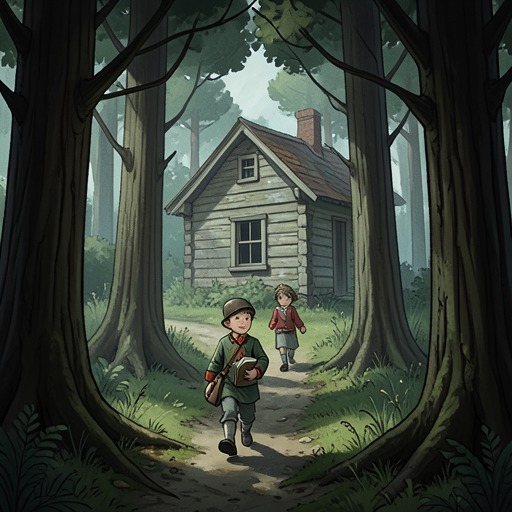
That autumn, the McGaherns have conacre in Coxhill. On a bitterly cold evening in late October, Brother Placid cycles out to the field, where Francis (Frank) McGahern is digging potatoes and John McGahern is picking them. He chats agreeably with both, then asks to speak with the father. The two walk toward the road and talk for a long time, beyond the boy’s hearing. McGahern continues picking and hauling buckets to the pit; when his father returns, he says nothing for a while.
The visit makes Brother Placid’s intervention tangible. He leaves the school to meet the family where the conflict over attendance is being lived—in a field where the father works and the son’s labor is immediately useful. The conversation itself remains private, and the memoir does not disclose its words. Its effect becomes clear only when Francis (Frank) McGahern finally tells his son that the Brother thinks he may make something of himself if he is prepared to work, and that he should go back to school the next morning. He adds that he will manage on his own.
Mentorship and Narrative Significance
Brother Placid’s role is consequential because his faith in McGahern is matched by action. A year earlier, John McGahern had used all his determination to prevent his father from placing him in a job as an accounts clerk and general factotum in a hardware store near Dublin. The field visit follows that threatened diversion from education and helps reverse it: Francis (Frank) McGahern agrees to let his son return, despite the work he will have to manage without him.
The memoir records the result from McGahern’s perspective as a sudden sense that his life is gathering in his own hands. Brother Placid does not remove the family’s economic demands or promise an assured scholarship; he identifies a possible future and helps secure the immediate condition for pursuing it. His mentorship is therefore both educational and practical: he sees talent in the examination results, traces its obstacle to the seasonal calendar, and carries his judgment from the classroom to the potato field.